Tracing Interoperability Challenges Across Verification Layers in Digital Bingo Networks
Written by Ben Hartmann · Aug 18, 2026
Tracing Interoperability Challenges Across Verification Layers in Digital Bingo Networks
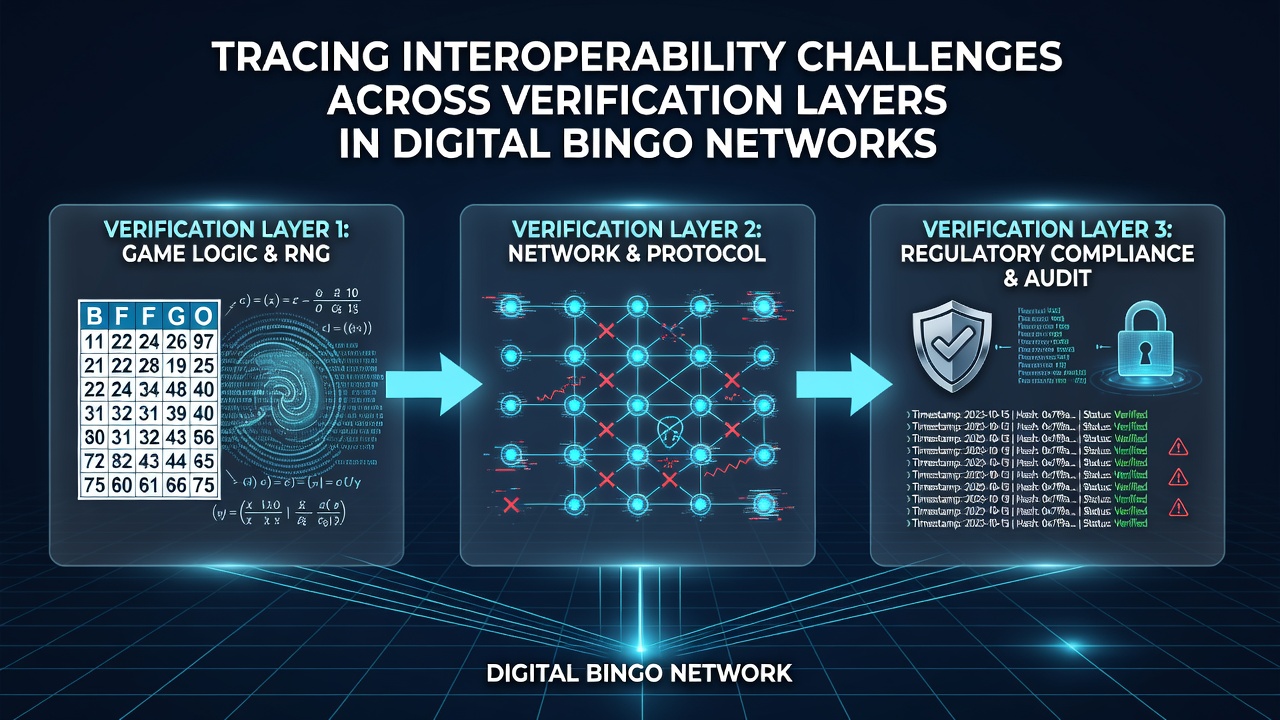
Digital bingo networks rely on multiple verification layers that handle player identity checks, transaction approvals, and game outcome validations, yet these layers often operate on separate protocols that resist smooth data exchange. Observers note that when one system uses a proprietary API for age verification while another adheres to open standards for payment clearing, delays and mismatches surface during routine operations. Research from gaming technology firms shows these gaps widen as networks expand across state lines and international borders, where each jurisdiction imposes distinct compliance requirements.
Core Components of Verification Layers
Verification in bingo platforms breaks down into distinct stages that include initial registration, ongoing transaction monitoring, and post-game result confirmation, and each stage draws from different data sources. Identity verification pulls from government databases or third-party services, while payment layers interface with banking rails and fraud detection algorithms, and game verification modules cross-check random number generators against certified logs. Studies indicate that these components function independently in many deployments, which creates friction when a player moves from one bingo operator to another within the same network.
August 2026 brought fresh attention to these issues after several North American platforms reported integration slowdowns during peak summer traffic. Data from industry monitoring groups reveals that verification handoffs failed in approximately 12 percent of cross-platform sessions during that period, forcing manual reviews that extended session times by several minutes on average.
Technical Barriers to Seamless Data Flow
Protocol mismatches stand out as a primary obstacle because older bingo software stacks continue to use legacy formats while newer entrants adopt RESTful or GraphQL endpoints. One engineering team at a mid-sized operator discovered that mapping fields between these formats required custom middleware that introduced latency and occasional data truncation. Security certificates also diverge, with some layers enforcing TLS 1.3 while others remain on earlier versions, which blocks automated certificate exchanges and forces periodic manual interventions.
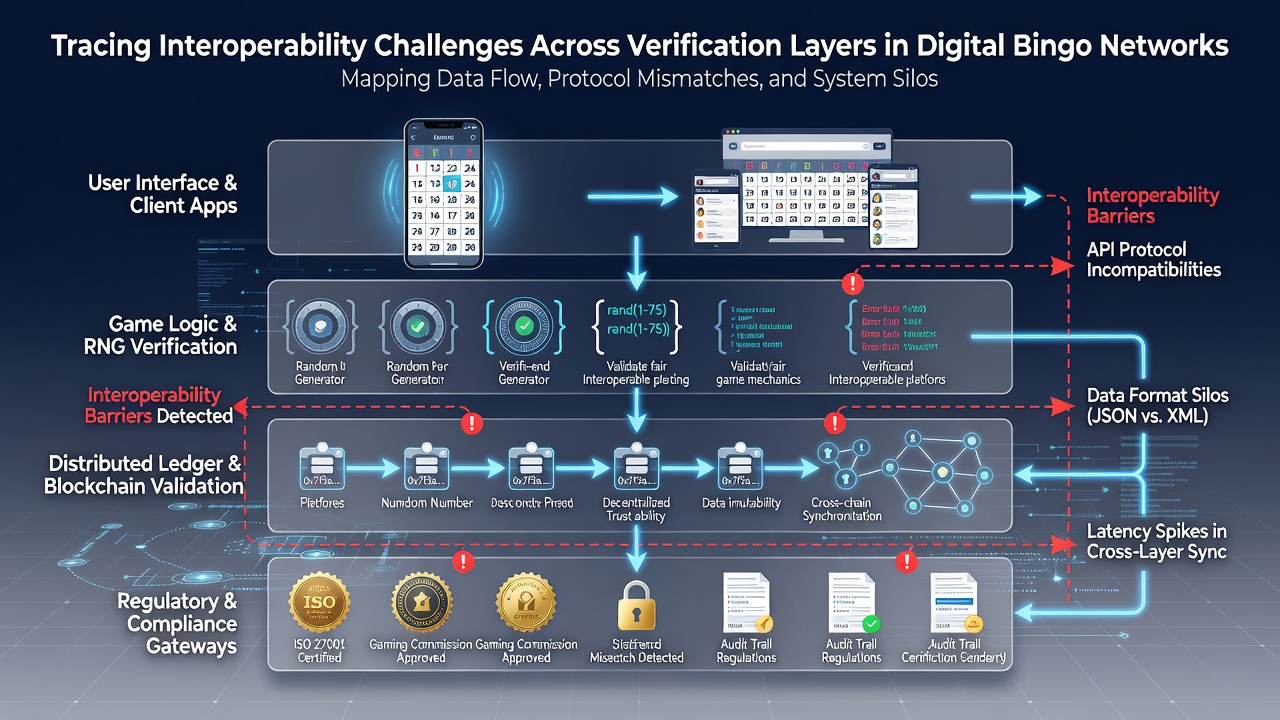
Encryption standards add another layer of complexity, since certain verification services mandate AES-256 with specific key rotation schedules while adjacent systems accept alternative ciphers. Those who've studied these setups report that aligning key management across vendors often consumes weeks of development time before live testing can begin.
Regulatory Influences on Integration
State and provincial regulators maintain separate reporting formats that verification layers must satisfy before data can move between jurisdictions. The New Jersey Division of Gaming Enforcement requires transaction logs in a structured XML schema, whereas certain Canadian provincial boards accept JSON submissions with different field definitions. This variance means operators building multi-jurisdiction networks must maintain parallel translation routines, which raises both costs and error rates during data handoffs.
Academic reviews of gaming compliance frameworks further highlight that audit trails generated by one verification layer frequently lack the metadata required by another regulator, compelling operators to rebuild reports from raw logs. Figures released by the Canadian Gaming Association in early 2026 showed that 18 percent of cross-border bingo transactions triggered additional audit requests due to incomplete interoperability between verification systems.
Case Examples from Recent Deployments
Take one operator that expanded its digital bingo offering into three new markets during spring 2026. Engineers traced repeated failures in player balance updates to a verification layer that timestamped records in local time while the receiving system expected UTC, which produced reconciliation discrepancies exceeding acceptable thresholds. Resolution required a time-zone normalization service inserted between the two layers, adding development overhead that stretched the launch timeline by six weeks.
Another instance involved a loyalty module that pulled verified play history from an identity layer but could not interpret the status codes returned by a separate payment verification service. Observers documented that players encountered frozen rewards accounts until the codes were manually mapped, illustrating how isolated verification components disrupt downstream processes even when each functions correctly on its own.
Approaches Under Exploration
Industry consortia have begun drafting common data schemas that verification layers could adopt to reduce translation needs. Early pilots coordinated by European testing laboratories demonstrate that standardized event schemas cut integration testing time by roughly one-third when all participating vendors commit to the same format. Meanwhile, modular architecture patterns allow operators to swap individual verification services without rewriting entire data pipelines, though adoption remains gradual because legacy contracts lock many platforms into single-vendor stacks.
Conclusion
Tracing interoperability challenges across verification layers shows that technical mismatches, regulatory divergence, and legacy constraints continue to shape how digital bingo networks exchange verified data. Continued monitoring of August 2026 metrics and subsequent quarters will clarify whether emerging schema standards and modular designs produce measurable gains in cross-layer reliability.