Mapping Dependencies Among Regulatory Frameworks, Payment Gateways, and Player Analytics in Emerging Bingo Markets
Written by Frankie Weber · Aug 2, 2026
Mapping Dependencies Among Regulatory Frameworks, Payment Gateways, and Player Analytics in Emerging Bingo Markets
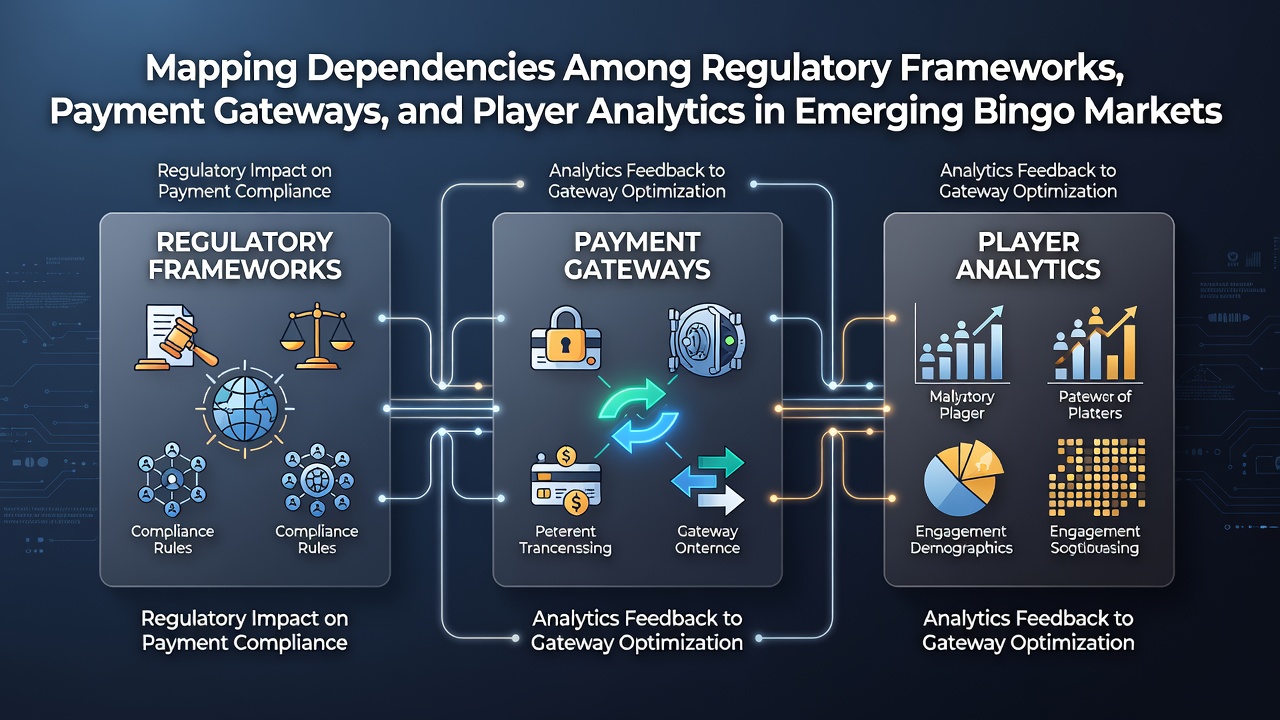
Emerging bingo markets across Latin America, Southeast Asia, and parts of Eastern Europe continue to reveal intricate connections among regulatory frameworks, payment gateways, and player analytics platforms, and these linkages shape operational decisions for operators seeking compliant growth. Data from multiple jurisdictions shows that licensing requirements often dictate which payment processors receive approval, while player analytics tools must capture transaction patterns to support ongoing compliance reporting.
Regulatory Frameworks Set the Boundaries
Observers tracking regulatory developments note that frameworks in these regions frequently mandate specific data retention periods and audit trails that directly influence gateway selection. For instance, rules introduced in several Latin American jurisdictions during 2025 required real-time reporting of player deposits, which in turn pushed operators to integrate gateways capable of exporting structured data feeds. In August 2026, additional guidance from Canadian provincial authorities highlighted similar expectations for cross-border bingo platforms serving Canadian players, emphasizing that payment systems must align with local tax verification protocols before analytics modules can process behavioral insights.
Those who've studied these markets point out that regulatory bodies rarely operate in isolation from technical infrastructure choices. A government report issued by the Australian Communications and Media Authority outlines how licensing conditions for digital bingo services include provisions for responsible gaming limits, and these provisions require analytics systems to flag unusual deposit velocities that payment gateways must then block or review.
Payment Gateways as the Central Conduit
Payment gateways function as the operational bridge between regulatory mandates and analytical capabilities because they handle the raw transaction data that analytics platforms later interpret. Research indicates that gateways supporting multiple currencies and local payment methods in emerging markets must embed compliance checks at the point of authorization, and this embedding creates dependency chains where analytics tools receive pre-filtered datasets rather than raw streams. Operators in Southeast Asian markets have documented cases where gateway limitations on data granularity forced analytics providers to adjust their models, resulting in less precise segmentation of player cohorts.
What's notable is how gateway certification processes often incorporate regulatory review cycles that reference analytics outputs. When a new payment method enters an emerging market, regulators examine historical player behavior patterns generated by analytics systems to assess fraud risks before granting approval, and this examination creates a feedback loop where past analytics influence future gateway availability.
Player Analytics Depend on Upstream Data Quality
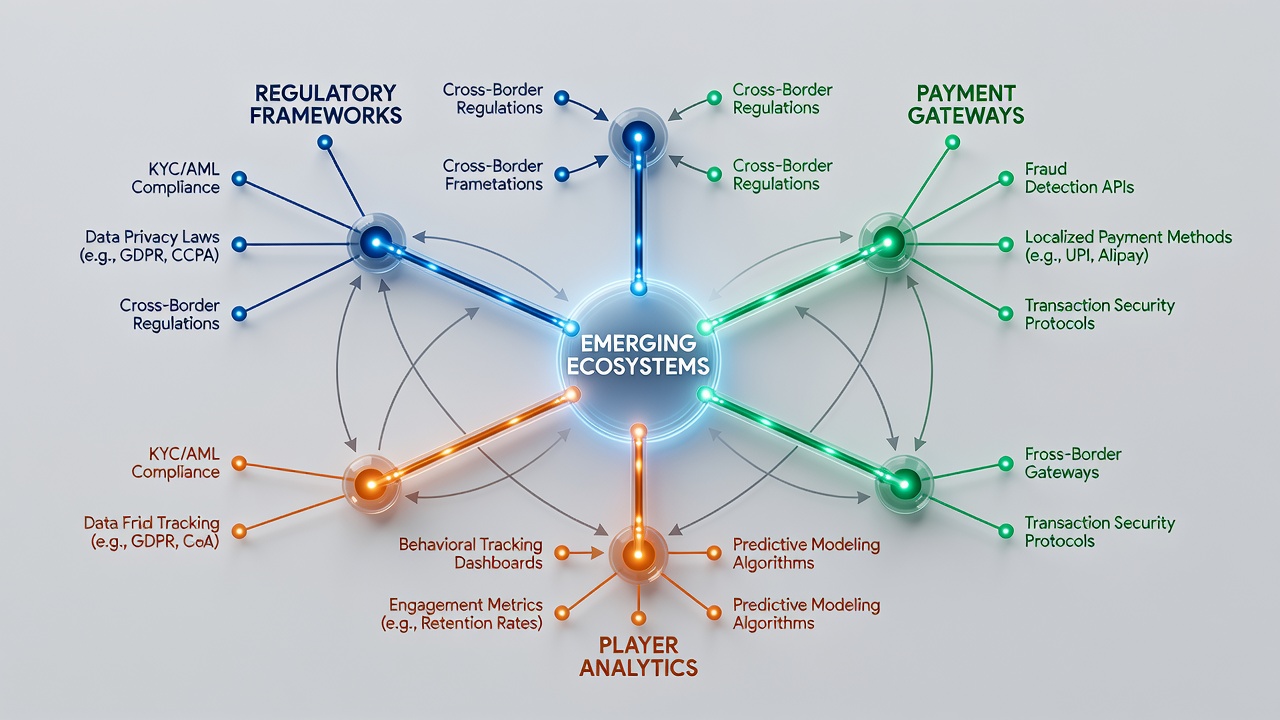
Analytics platforms in these markets rely on clean, permissioned data streams from gateways that already satisfy regulatory formatting standards. Studies from European research institutions examining digital gaming networks found that variations in gateway API structures can alter the accuracy of retention metrics and lifetime value calculations by up to 18 percent, depending on how transaction metadata is preserved. This dependency means operators cannot simply swap analytics vendors without first confirming that the new system can ingest data formatted according to existing regulatory and gateway specifications.
One documented implementation in an Eastern European bingo network demonstrated that when payment gateways added mandatory fields for source-of-funds verification, analytics teams had to redesign their clustering algorithms within weeks to maintain predictive accuracy on player churn. The adjustments succeeded only because the regulatory framework had previously required gateways to expose those fields in standardized formats.
Interdependencies in Practice
Mapping exercises conducted by industry analysts reveal three primary dependency pathways. First, regulatory updates trigger gateway modifications that subsequently reshape analytics inputs. Second, analytics outputs on suspicious patterns prompt regulators to impose new gateway restrictions. Third, gateway performance metrics influence which player behaviors regulators prioritize for monitoring. These pathways operate simultaneously in most emerging markets, and operators who map them early gain clearer roadmaps for system upgrades.
Figures released by the European Gaming and Betting Association in mid-2026 show that markets with tightly coupled regulatory and technical requirements experienced fewer compliance incidents compared with those where integration lagged. The same data set indicated that platforms maintaining bidirectional data flows between gateways and analytics reduced reconciliation errors during regulatory audits.
Conclusion
The dependencies among regulatory frameworks, payment gateways, and player analytics form a closed system in emerging bingo markets where changes in any component propagate through the others. Operators who document these connections position themselves to respond efficiently when August 2026 updates or subsequent policy shifts occur, because they already understand how regulatory language translates into gateway specifications and analytics requirements. Continued observation of these linkages will remain essential as more jurisdictions refine their approaches to digital bingo oversight.