How Progressive Jackpot Structures Influence Affiliate Revenue Models in Bingo Platform Ecosystems
Written by Tina Schmitz · Aug 18, 2026
How Progressive Jackpot Structures Influence Affiliate Revenue Models in Bingo Platform Ecosystems
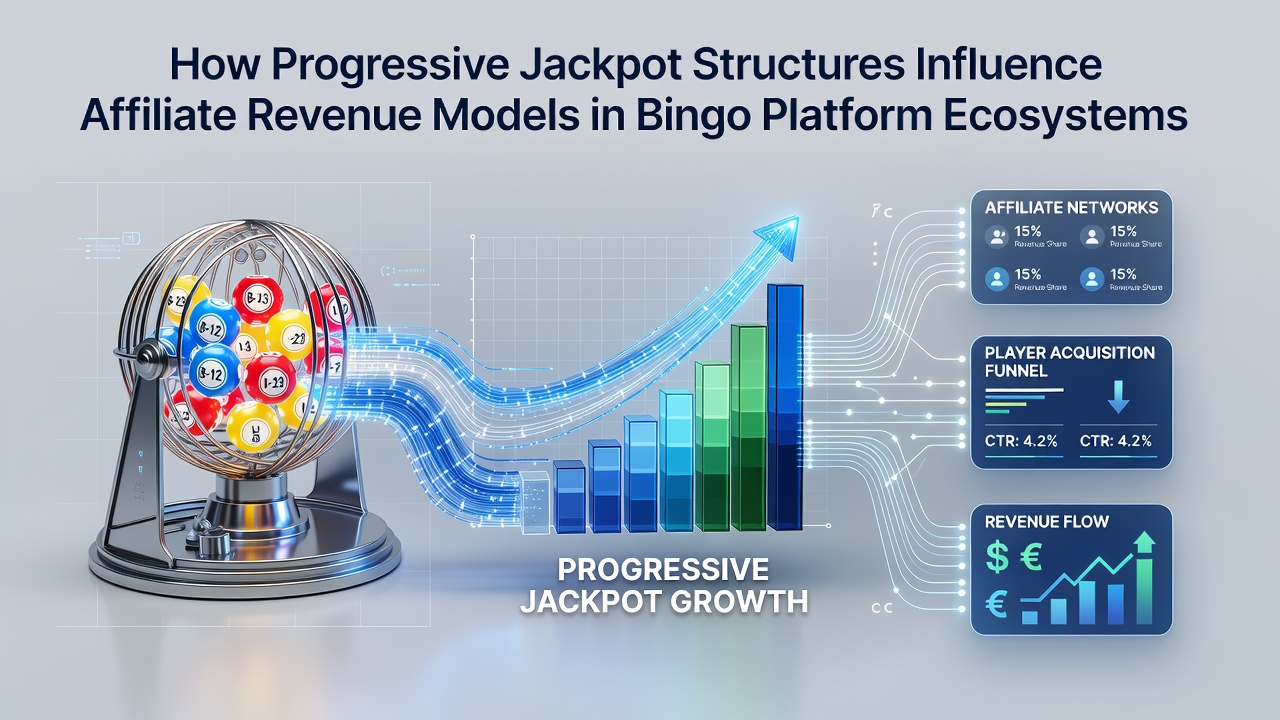
Progressive jackpot structures in bingo platforms accumulate contributions from a fixed percentage of each wager into a shared pool that grows until a winner claims it, and this mechanism directly shapes how affiliates earn commissions through revenue share agreements tied to player deposits and activity levels. Platform operators allocate between 1 and 5 percent of every ticket purchase into the progressive fund according to data from multiple network operators, which creates larger prize displays that attract new players through affiliate marketing channels. Affiliates receive payments based on the net revenue generated by referred users, so when jackpots climb teh increased deposit volumes and session lengths raise the overall commission base without requiring changes to the underlying affiliate agreement percentages.
Mechanics of Progressive Systems in Networked Bingo Environments
Networked bingo platforms connect multiple operators so that a single progressive jackpot draws contributions from players across different sites and jurisdictions, and this pooling effect accelerates growth rates compared with standalone room jackpots. Researchers at the University of Nevada, Las Vegas Center for Gaming Research have documented how cross-site linkages produce prize pools that can exceed several million dollars within weeks during peak periods, and affiliates benefit when those visible totals drive higher conversion rates on their promotional links. The contribution rate remains fixed per ticket sold, yet the visibility of the climbing total influences player behavior such as longer play sessions and repeated deposits that extend the revenue window tracked by affiliate tracking software.
Affiliate Commission Structures and Jackpot-Driven Player Value
Most bingo affiliate programs operate on revenue share models that pay between 25 and 40 percent of net gaming revenue for the lifetime of each referred player, and progressive jackpots alter the calculation by increasing average revenue per user through heightened engagement. When a jackpot reaches a threshold that triggers widespread promotion, referred players tend to deposit more frequently, which raises the lifetime value metric used to forecast affiliate earnings. Data from the American Gaming Association shows that bingo verticals with active progressive networks report 18 to 22 percent higher average revenue per active user during months when jackpots exceed baseline averages by 50 percent or more, and this uplift flows directly into affiliate payouts without any adjustment to the commission rate itself.
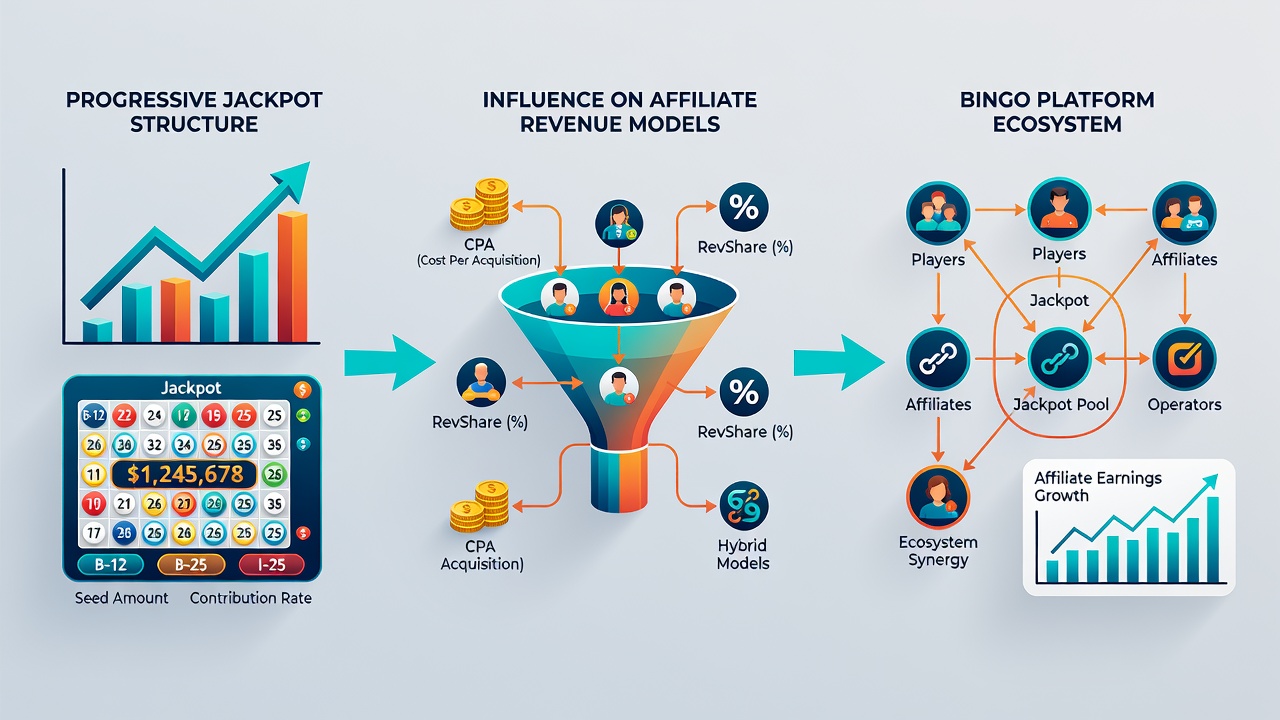
Platform providers adjust the underlying bingo software to track jackpot contributions separately from standard game revenue, which allows precise allocation of affiliate commissions even when part of each wager funds the progressive pool. This separation prevents disputes over whether jackpot contributions count toward the revenue base, and most agreements now include explicit language confirming that all wagers contribute to the commission calculation. Observers note that affiliates who promote rooms with the largest progressive networks often see steadier month-to-month earnings because the jackpot visibility reduces player churn during slower periods such as early August 2026 when seasonal participation typically dips.
Network Effects and Scaling Affiliate Earnings
Bingo ecosystems that link multiple progressive jackpots across white-label and standalone sites create network effects that amplify both player acquisition and retention, and affiliates positioned within these networks capture a larger share of the resulting revenue growth. One operator managing three linked bingo platforms reported that affiliate-driven signups increased by 31 percent in the quarter after a new cross-site progressive was introduced, while the average first-month deposit value rose by 14 percent. These gains translate into higher affiliate commissions because the revenue share agreement captures the full value of each deposit and subsequent play, including any additional wagers stimulated by the growing jackpot display.
Tracking systems now integrate real-time jackpot meters into affiliate dashboards, which lets marketers adjust campaigns toward rooms showing the fastest pool growth and thereby optimize their own earnings timelines. teh same systems record the exact contribution percentage taken from each wager so that operators and affiliates maintain transparent records during monthly settlements. European Gaming and Betting Association reports indicate that markets with mature progressive networks maintain affiliate retention rates above 85 percent over 24 months, largely because consistent jackpot activity supports predictable commission streams even when individual player volumes fluctuate.
Regulatory Compliance and Revenue Allocation Adjustments
Regulators in multiple jurisdictions require clear disclosure of how progressive contributions affect player funds and operator revenue, and these rules indirectly influence affiliate models by mandating separate accounting for jackpot reserves. Compliance teams at platform providers implement automated reconciliation processes that isolate jackpot contributions before calculating net revenue for affiliate settlements, which reduces audit friction and ensures timely payments. Affiliates operating in regulated markets receive statements that itemize the portion of revenue derived from progressive versus non-progressive play, although the commission percentage remains unchanged regardless of the source.
As platforms prepare updates scheduled for August 2026, several providers have announced incremental increases in the progressive contribution rate from 2 percent to 2.5 percent on selected bingo variants, a change that will enlarge prize pools while simultaneously expanding the revenue base that supports affiliate commissions. The adjustment maintains the same affiliate payout ratio, yet the larger overall pot produces higher absolute payments when player activity scales with the improved jackpot potential.
Conclusion
Progressive jackpot structures in bingo platform ecosystems create measurable effects on affiliate revenue models by driving higher player deposits, longer session times, and improved retention metrics that increase the total commission pool available to marketers. Networked pooling accelerates jackpot growth and thereby amplifies these effects across multiple sites, while transparent tracking and regulatory accounting practices ensure that affiliates receive accurate payments based on the full wager value. Data from industry research groups and regulatory filings confirm that affiliates aligned with platforms featuring active progressive networks experience more stable earnings patterns, particularly during seasonal transitions, because the visible prize accumulation sustains player interest and deposit activity throughout the year.