Decoding Synchronization Challenges in Cross-Device Bingo Player Sessions
Written by Zoe Roth · Aug 25, 2026
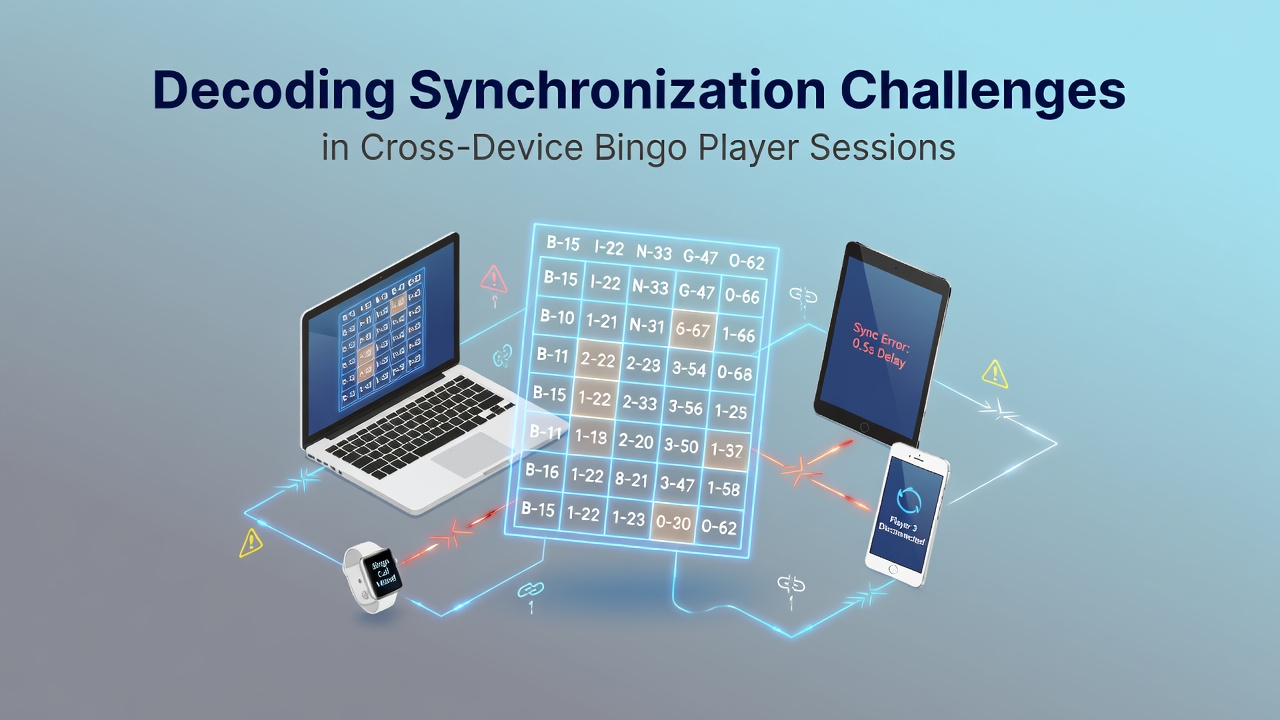
Decoding Synchronization Challenges in Cross-Device Bingo Player Sessions
Cross-device bingo sessions require precise coordination between mobile phones, tablets, desktops, and other platforms so that player cards, called numbers, and account balances remain consistent at all times. Developers address these needs through layered architectures that manage state replication across distributed servers while accounting for variable network conditions. Data from industry reports shows that player switch rates between devices increased notably during the first half of 2026, placing additional demands on real-time synchronization protocols.
Core Technical Components Driving Session Continuity
Session persistence relies on cloud-based state engines that store player data in centralized repositories and push incremental updates through WebSocket connections or similar bidirectional channels. These systems track every number drawn, every daub action, and every bonus trigger so that resuming on a second device produces identical outcomes. Observers note that latency spikes above 150 milliseconds often trigger visible desync events where a player sees mismatched card states, and such events prompt automatic rollback procedures managed by backend reconciliation services.
Modular service designs separate game logic from user interface layers, allowing each device type to receive tailored data streams without altering the core bingo engine. Researchers at academic institutions have examined how event sourcing patterns log every action as an immutable record, which then feeds replay mechanisms when a device reconnects after a network interruption. In August 2026 several platform operators reported deploying enhanced conflict-resolution algorithms that prioritize server-side truth during concurrent edits from multiple devices.
Network Variability and Its Impact on Real-Time Updates
Mobile networks introduce packet loss and fluctuating bandwidth that desktop connections rarely encounter, creating uneven delivery of bingo call sequences. Synchronization layers incorporate buffering queues and predictive prefetching of upcoming numbers to mask these inconsistencies from the player. Studies conducted by European gaming technology consortia indicate that adaptive bitrate streaming combined with delta compression reduces payload sizes by up to 40 percent, helping maintain fluid sessions even on congested 5G or LTE links.
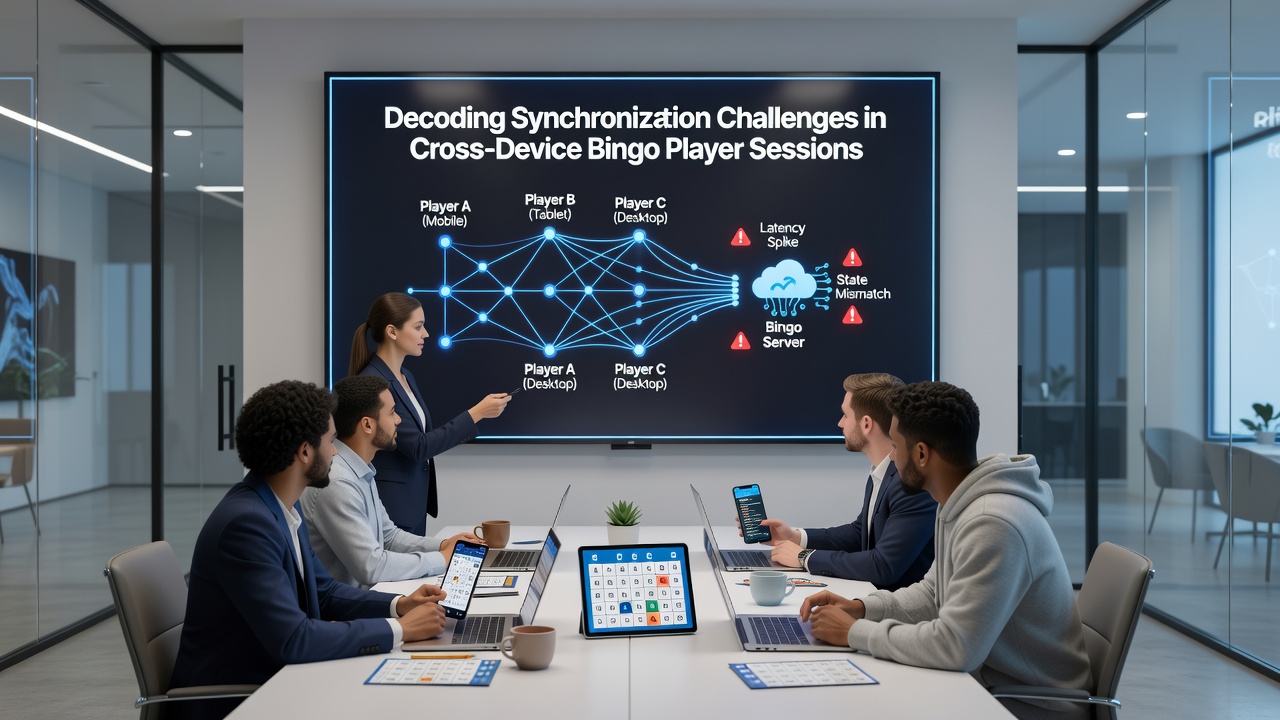
Security protocols add another dimension because encrypted payloads must be decrypted and validated before state updates apply. Any mismatch in sequence numbers or cryptographic tokens forces a full session resync that interrupts gameplay. Those who manage large bingo networks emphasize the importance of timestamp ordering and vector clocks to detect and resolve out-of-order events across geographically distributed data centers.
Regulatory Compliance and Audit Requirements
Regulators in multiple jurisdictions require complete audit trails of all cross-device interactions, including timestamps, device identifiers, and reconciliation events. Platforms must demonstrate that no player gains an advantage through session migration and that jackpot eligibility remains tied to verified account states. Data published by the Nevada Gaming Control Board highlights how operators submit quarterly reports detailing synchronization failure rates and remediation steps taken after each incident.
Compliance teams integrate automated monitoring that flags anomalies such as duplicate daubs or mismatched prize calculations across devices. These alerts feed into compliance dashboards that regulators can review in near real time. Industry associations including the Canadian Gaming Association have published guidelines encouraging standardized APIs for state export so that third-party auditors can verify integrity without accessing proprietary game engines.
Emerging Solutions and Platform Adaptations
Edge computing nodes positioned closer to major population centers reduce round-trip times for state acknowledgments, particularly benefiting players who alternate between home Wi-Fi and cellular data. Containerized microservices allow operators to scale synchronization workers independently during peak evening hours when session migrations spike. One documented case involved a North American operator that reduced average resync duration from 4.2 seconds to under 900 milliseconds after migrating to a distributed ledger for action logging.
Testing frameworks now simulate thousands of concurrent device switches under controlled network degradation scenarios, generating metrics that feed continuous integration pipelines. These simulations reveal edge cases where rapid toggling between portrait and landscape orientations on tablets can trigger duplicate event emissions if client-side debouncing is insufficient.
Conclusion
Synchronization challenges in cross-device bingo environments stem from the intersection of variable networks, strict regulatory mandates, and the need for instantaneous state consistency. Platform operators continue to refine event-sourcing models, edge delivery networks, and automated reconciliation tools to meet these demands. As device diversity grows and regulatory scrutiny intensifies, the technical frameworks supporting seamless bingo sessions will remain a central focus for developers and compliance specialists alike.